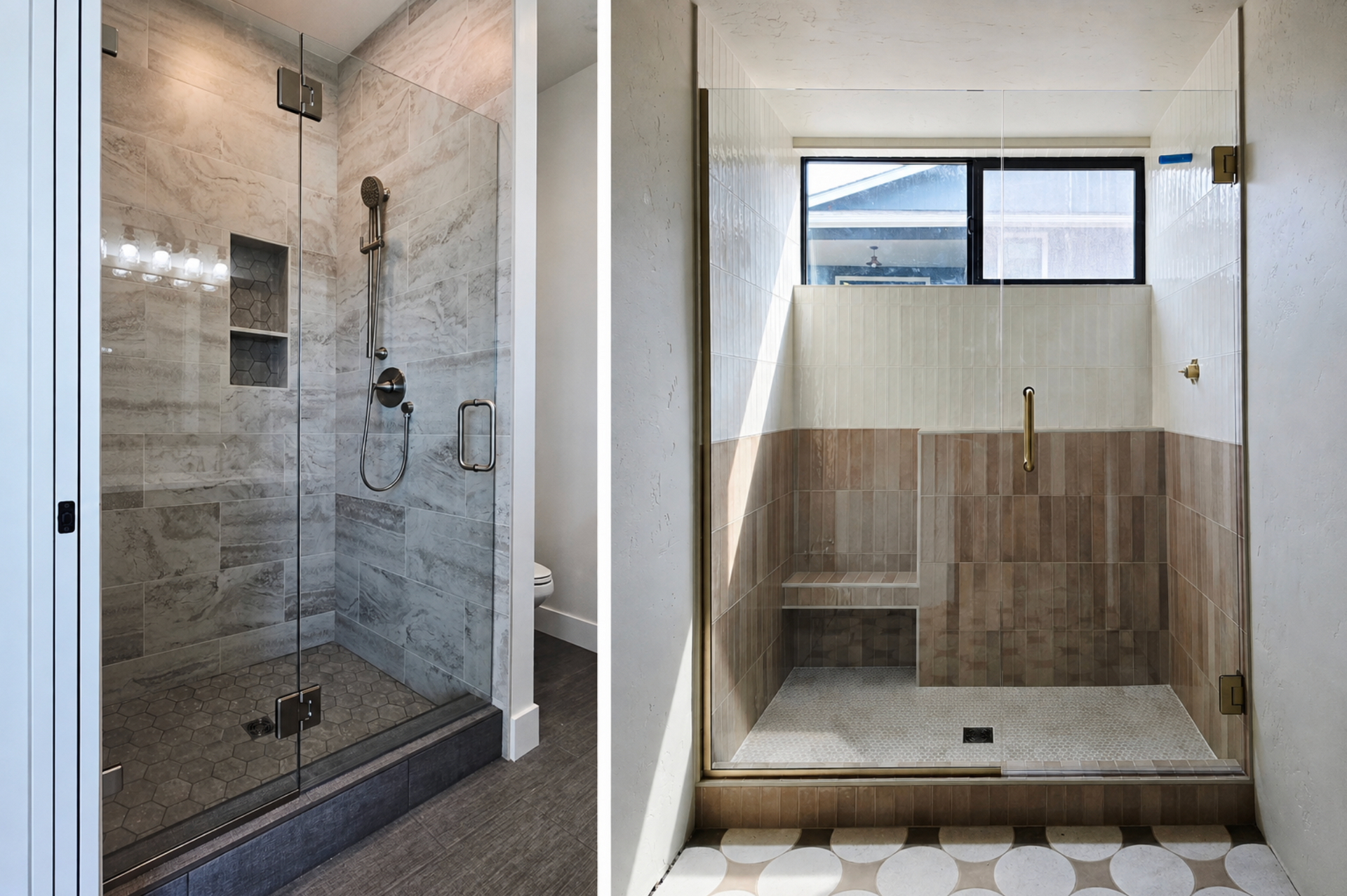
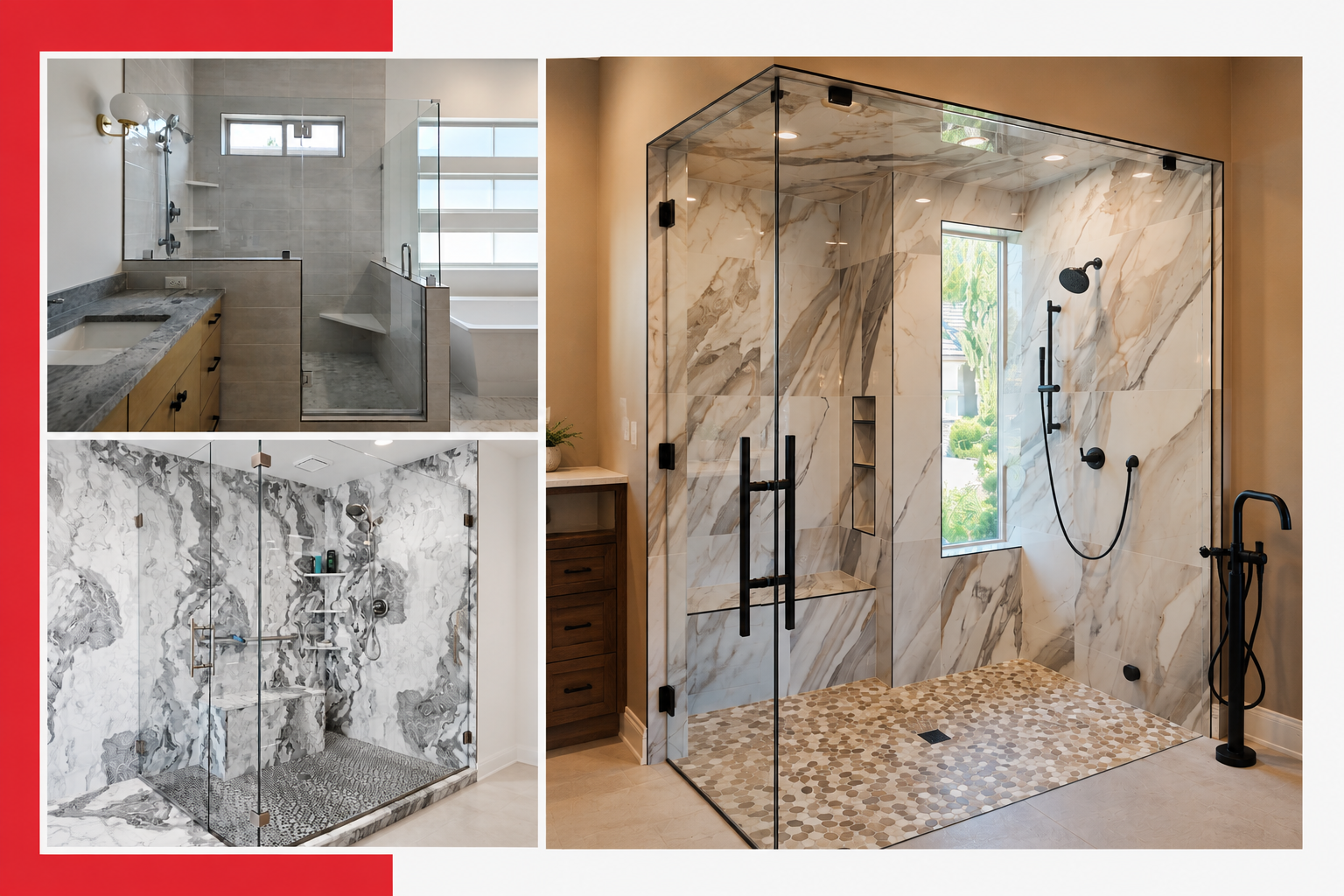
A frameless bypass shower door is a sliding glass enclosure built from two heavy glass panels that ride on a top track and pass by each other, so nothing swings out into the room. In Boise, most custom frameless bypass installations run between
$2,000 and
$4,500
installed, depending on opening width, glass thickness, and hardware finish. Roadrunner Glass Co. has fabricated and installed custom shower glass since
1966.
If your bathroom is short on floor space, a swinging shower door is often the wrong answer. It needs clearance to open, drips on the floor every time you step out, and in a compact Boise bathroom, it can bump into a vanity or toilet. A frameless bypass door solves that problem without giving up the clean, open look people expect from
frameless shower enclosures in Boise.
This guide covers how
frameless bypass doors work, what they cost, what glass and hardware go into a quality install, and how to tell whether a bypass layout is right for your bathroom. Everything here reflects how we actually build these enclosures for Boise homes, not a generic product description.
What a Frameless Bypass Shower Door Actually Is
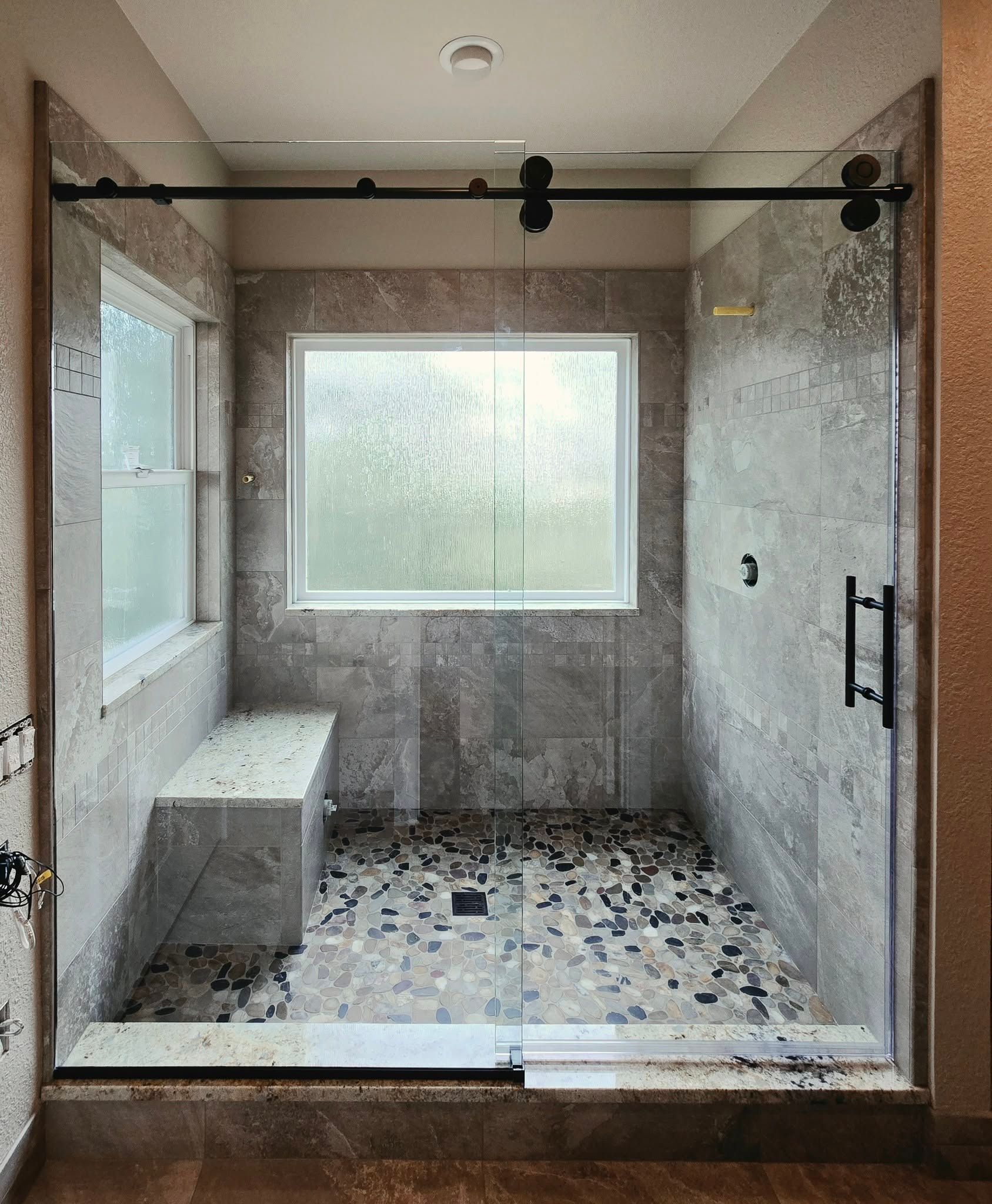
A frameless bypass shower door uses two panels of tempered glass mounted on a header track. One panel slides in front of the other, which is where the term bypass comes from. You can open either side, and the panels never leave the shower opening's footprint.
The word frameless matters here. On a framed sliding door, every edge of the glass sits inside an aluminum channel, and the bottom rail collects water and soap residue. On a frameless bypass enclosure, the glass edges are polished and exposed, the hardware is minimal, and the only visible metal is usually the header track and the pulls.
You will also see this style called a frameless sliding shower door, a double sliding frameless shower door, or a frameless bypass shower enclosure. They all describe the same basic system. The differences come down to track design, glass thickness, and how the panels are supported.
Where Bypass Doors Make the Most Sense
Bypass systems work best on wider openings, typically 48 inches to 72 inches, which covers most
standard alcove showers and tub-to-shower conversions in Boise homes. They are a strong fit when:
- The shower sits directly across from a vanity or toilet with limited clearance
- You are converting an old tub alcove into a walk-in shower
- The bathroom is small and a swinging door would hit a fixture or a wall
- You want a wide opening on both ends of the enclosure
- You are working within a defined remodel budget and want a custom look
Frameless Bypass Shower Door Cost in Boise
Most Boise homeowners spend between
$2,000 and
$4,500 on a custom frameless bypass shower enclosure, installed. Simpler openings with
3/8 inch glass and a standard finish land near the lower end. Wider openings, thicker glass, specialty finishes, and protective coatings push toward the upper end. Every quote we give follows an on-site measurement.
Several factors move that number:
- Opening width. A
60-inch alcove uses less glass than a
72-inch opening, and the panel weight affects which track system is required.
- Glass thickness. Bypass panels are usually
3/8 inch tempered glass. Half-inch glass costs more and adds noticeable weight and rigidity.
- Glass type. Standard clear glass has a faint green cast on the edges. Low iron glass, sometimes sold as Starphire, is closer to colorless and typically adds a premium.
- Hardware finish. Brushed nickel, matte black, polished chrome, and brushed brass all price differently, and some finishes have longer lead times.
- Protective coating. A factory-applied or shop-applied coating resists hard water spotting and reduces cleaning time.
- Wall condition. Tile that is out of plumb, uneven curbs, and old framing all add labor. This is common in older Boise homes and worth catching before fabrication.
We publish pricing openly because homeowners deserve to plan a bathroom remodel with real numbers. The range above reflects
custom-fabricated showbox store.
Why Boise Homeowners Choose Bypass Over a Swinging Door
Both styles have a place. The right answer depends on the bathroom, not on which one looks better in a showroom.
A frameless bypass door is usually the better call when floor space is tight, when the shower opening is wide, or when a swinging panel would drip onto a wood floor or a rug every time someone steps out. Because the panels stay inside the opening, water drains back into the pan instead of the room.
A swinging or pivot door is usually the better call when the opening is narrow, when you want a completely uninterrupted single panel of glass, or when the design calls for a fully open entry with no track overhead.
Here is the short version of the trade-off. Bypass gives you space efficiency and a wide, flexible opening. Swinging gives you a single clean sheet of glass and no header. Most Boise bathrooms with a standard alcove benefit more from the bypass layout, which is why we install so many of them.
If you are still weighing layouts, our team walks through both options during the measurement visit and shows you
custom frameless shower glass configurations that fit your exact opening.
Glass, Hardware, and Safety Standards
This is the part most product pages skip, and it determines whether your shower still looks and works right in ten years.
Tempered Safety Glass Is Required
All shower glass installed in a residential bathroom must be safety glazing. Tempered glass is heat-treated, making it significantly stronger than ordinary annealed glass of the same thickness; if it does break, it crumbles into small, dull pieces rather than sharp shards. The relevant United States standards are ANSI Z97.1 and CPSC 16 CFR 1201, and the International Residential Code specifically lists shower and bathing enclosures as hazardous locations.
Every panel we fabricate carries a permanent etched stamp identifying the manufacturer and the standard it meets. If a bid ever comes back without tempered glass in a shower, that is a serious problem, not a cost-saving idea.
Track Systems and Rollers Do the Real Work
The glass gets the attention. The hardware decides whether you are happy in year five.
A bypass enclosure lives or dies by the header track and the roller assemblies. Cheap rollers develop flat spots, bind in the track, and eventually drag. Quality systems use sealed bearings, adjustable roller height so the panels can be leveled after installation, and anti-jump blocks so a panel cannot lift off the track.
We build with commercial-grade shower hardware from established suppliers, including
CR Laurence, one of the largest architectural glass hardware manufacturers in North America. Using a mainstream hardware line matters for a practical reason. Ten years from now, replacement rollers and seals will still be available.
Coatings and Hard Water
Boise tap water runs hard. Left alone, mineral deposits etch into the microscopic pores of untreated glass, and once that happens, no amount of scrubbing brings the clarity back.
That is why we made protective glass coating standard on qualifying frameless shower installations. The coating bonds to the glass surface and helps water and minerals sheet off instead of bonding to it, which significantly cuts cleaning time. That change was announced publicly in a
Roadrunner Glass Co. press release covering the Diamond Seal Systems coating program.
Coating is not a substitute for maintenance. It just means a squeegee and a weekly wipe-down keeps the glass looking new instead of losing a Saturday to a bottle of acid-based cleaner.
Measuring a Bypass Enclosure the Right Way
Almost every bypass shower door complaint traces back to measurement, not glass.
Bathroom walls are rarely plumb. Tile setters work to a finished surface, not to a laser, and in older Boise homes, settling can leave a
1/4 inch of variation from the curb to the ceiling. A prefabricated kit hides that with oversized frames and vinyl filler. A frameless enclosure has nowhere to hide it, so the measurement has to account for it before anything is cut.
Our process handles that in a specific order:
- On-site measurement. We measure the opening at multiple heights, check plumb on both walls, check level across the curb, and document any variation.
- Layout and hardware selection. We confirm panel widths, overlap, track length, finish, and glass type with you before ordering anything.
- Fabrication. Glass is cut, tempered, edge polished, and notched for hardware to your exact dimensions. Nothing is trimmed on site, because tempered glass cannot be cut after tempering.
- Installation. We level the header, hang and adjust the panels, fit seals and sweeps, and fine-tune the roller height so both panels glide evenly.
- Final walk-through. We test the slide across the full track, check for gaps, confirm drainage, and go over care instructions with you.
Most frameless bypass installations are completed in a single day once the glass is fabricated. Fabrication lead time depends on glass type and hardware finish, and we confirm the timeline in writing when you approve the layout.
Design Choices Boise Homeowners Ask About Most
Glass texture. Clear glass is by far the most requested because it makes a small bathroom feel larger and shows off tile work. Rain glass and frosted glass add privacy and hide water spots better, which some homeowners prefer for a guest bath.
Finish matching. Matching the track and pulls to your shower valve and vanity hardware is the single easiest way to make a bathroom look designed rather than assembled. Matte black and brushed nickel are the most common requests we see in Boise remodels right now.
Header profile. A slim header keeps the frameless look intact. A heavier commercial-style header carries more weight and suits half-inch glass on wide openings.
Handles. Back-to-back pulls, ladder pulls, and towel bar pulls all change the look of the enclosure. Towel bar style pulls are practical in a small bathroom because they add a hanging spot without another wall fixture.
If you want to see how these choices look together before committing, we can walk you through completed local projects and current
bypass shower door options for Boise bathrooms during your estimate.
Caring for a Frameless Bypass Shower Door
Maintenance on a frameless bypass enclosure is simple, and doing it consistently is what keeps the glass clear.
- Squeegee the glass after each shower. This one habit prevents most mineral buildup.
- Wipe the track dry weekly so debris and residue do not accumulate around the rollers.
- Clean with a mild, non-abrasive cleaner. Skip anything with ammonia or harsh acid, which can damage coatings and seals over time.
- Replace worn sweeps and seals when you see water escaping the opening. These are inexpensive wear parts.
- Check the roller adjustment once a year. A panel that starts to drag usually needs a small height adjustment, not new hardware.
Talk to a Boise Glass Company That Fabricates and Installs Its Own Work
Roadrunner Glass Co. has been in the glass business since
1966 and has served Boise homeowners for more than
15
years. We measure every opening ourselves, fabricate custom shower glass rather than fitting prefabricated kits, and stand behind the install. Our shop on West Fairview Avenue runs its own glass polishing equipment, which gives us tighter control over edge quality and turnaround.
If you are planning a bathroom remodel, converting a tub alcove, or replacing a framed sliding door that has been sticking for years, we can tell you quickly whether a bypass layout fits your space and what it will cost.
Request an on site measurement from Roadrunner Glass Co. or call
208 330 1552. We will look at the opening, talk through glass and hardware options, and give you a written number with no pressure attached.